
Whether you’re entirely fresh to the instrument or transitioning from a six-string guitar to a bass, picking out the best beginner bass guitar is incredibly important. The bass guitar has a significant physical barrier attached to it, so while it may just look like a ‘bigger’ guitar, it has very individual features and can be difficult to master.
If you are (or the person you are buying for is) a smaller individual, or a child, bear in mind that full-scale bass guitars can be intimidatingly big, so you may want to consider what’s called a short-scale bass for young children. Most adults and older children should be fine with a full-size bass guitar, but you could prioritise a short-scale instrument if you have particularly small dimensions or want to make the learning process easier.
For me, the best overall option is the Squier Classic Vibe 60s Precision Bass. It’s a full-size instrument based on an all-time classic, and delivers exceptional value for money when it comes to build quality and tonal versatility. If that’s a little too expensive, or you want something smaller, the Squier Bronco Bass delivers a comfortable playing platform that’s relatively cheap.
If you’re buying for the first time, I’ve got over twenty years of experience playing guitar, and over five years of that in music retail, so you can lean on my expertise here. I’ve included a how to choose section, loads of commonly asked questions in the FAQs, and a glossary of key terms to help you break down the technical lingo associated with bass guitars.
My top picks

Based on one of the most popular basses of all time, and embodying its tone and look, it's easy to see why the Squier Classic Vibe 60s Precision Bass takes the number one spot.

If price is your number one concern, the Squier Bronco Bass represents phenomenal value for money, combining low cost in a bass that's seriously good looking, and super simple to use.

As a short-scale bass, the smaller dimensions of the Ibanez miKro GSRM20 make it perfect for younger players looking to take on the bass guitar for the first time. It's a great bass guitar in its own right, too, with plenty of more experienced fans.

If you're an adult learning to play bass and want something a little more serious, the Sterling by Music Man StingRay RAY4 is a nicely appointed bass guitar that won't cost the earth.

While we wouldn't recommend starting on a five-string, the Squier Classic Vibe 70s Jazz Bass makes for a compelling argument with its silky playability and powerful low-end tones.

The Jackson Spectra JS2 looks like a metal bass guitar, but it's not just an aesthetic. With switchable passive/active electronics, it's got a powerful tone to match the heavy looks.
Best overall

✅ Buy if you want a great all-rounder: This bass is based on an all-time classic, so it’s great for players who want something to grow with.
❌ Avoid if you’re buying for a small child: This is a full-size bass guitar, so not ideal for younger learners.
Overview
The Squier Classic Vibe 60s Precision Bass is about as iconic a silhouette as you’re ever going to get with a bass guitar. Brimming with history, but made affordable thanks to it coming from Fender’s approved sub-brand, Squier, it combines excellent value with fantastic build quality, making it my pick as the top bass guitar for beginners.
Build quality
Modern Squiers have become the frontrunners for budget guitars and basses that also boast supremely high levels of build quality and finish, and that is no different here. The poplar body is comfortably lightweight, without feeling cheap, and the maple neck topped with Indian laurel fingerboard gives a reassuringly premium look and feel. As with any mass-manufactured bass, there can be some minor fit and finish issues, but nothing that is going to stop it from producing great tones.
Playability
A standout area of the whole Classic Vibe range is its playability. The 60s Precision Bass is no exception, featuring the same ergonomic design and user-friendly playing experience as more expensive stablemates. The neck is a little thinner than you'd get on a more traditional P-Bass, but I think this is a welcome change and makes it more comfortable for beginners.
Sounds
That P-Bass growl is present and accounted for here, delivering tones that defy the name on its headstock – and that’s in no small part thanks to the Alnico pickup, designed by Fender. It’s versatile too, with the master tone control perfect for taming things when required. It might sit at the top of what you’d call the ‘budget’ price bracket, but for the money, it’s a lot of instrument and one that will last you well into your playing career.
Best budget

✅ Buy if you want a cheap bass: This low-cost and simple bass is great if you want something you can pick up without spending loads.
❌ Avoid if you want versatility: This is a simple bass guitar with a single pickup, so look elsewhere if you need to play multiple genres.
Overview
I love the Squier Sonic Bronco Bass. It’s a simple little rock and roll bass and is instantly comfortable for new players due to its short-scale length and compact body. To top it off, it comes in at a superb price point. Color options are limited, but those they do offer (Daphne Blue, Arctic White, Tahitian Coral, and Black) should provide something for everybody.
Build quality
Squier doesn't let anything leave its factory unless it’s well put together, and that is the case with the Bronco bass. As far as beginner instruments go, it has a solid build quality that ensures stability and should be pretty durable too, meaning it will more than stand up to the rigors of practice and performance.
Playability
The Sonic Bronco bass is absolutely designed with the smaller player in mind, with a shorter 30” scale length, which balances the weighty tones you’d expect from an electric bass with the playability of a much smaller instrument. The narrow neck width makes it super comfortable for beginner players, and it's got Fender's ever-popular 'C' shape neck profile. You may want to factor in the cost of a setup to get it to its best.
Sounds
The solitary single coil on the Bronco bass doesn’t offer a huge amount of versatility, but you may be surprised by the punchy tones you can achieve. The lower tension on the strings due to the shortened scale length provides a characteristic thump and decent resonance. It’s a lot of fun to play with gain too!
Best for kids

✅ Buy if you have a young child who wants to play bass: The comfortable size of this bass makes it ideal for younger learners.
❌ Avoid if you’re a larger player: For adults or those with bigger dimensions, this bass will probably feel a bit cramped.
Overview
If you’re looking for value, particularly for a budding bassist taking their first steps on the instrument, the Ibanez miKro GSRM 20 is our top choice for the smaller player, though even larger adults might enjoy thrashing this little beast around.
Build quality
I’m usually not a fan of any guitars aimed at children, because they’re generally made extremely cheaply and with poor build quality, which is a bad platform upon which to build your playing. The MiKro is different. It’s built to Ibanez’s high standards and details like the body carve show this hasn’t just been made quickly with little thought. This is a proper bass guitar, not a toy.
Playability
The super short scale makes it very comfortable to play, particularly for younger players who would struggle on a full-scale bass. It does mean extreme downtuning is off the menu, but the playability benefits massively outweigh this slight disadvantage. The maple neck is smooth, and I have a sneaking suspicion that quite a lot of larger bassists would secretly find this more enjoyable to play than they lead on, though the very largest players will struggle.
Sounds
The sound has a thump that is characteristic of reduced scale basses. It’s got a sort of scooped midrange, which I like, but it does limit its versatility a touch. A master tone and individual volume controls for each pickup mean you do have decent amounts of control over your sound, though.
Best for adults

✅ Buy if you’re an adult who’s beginning to learn the bass guitar: This instrument is perfect for exploring multiple genres and has plenty of depth for those who already know an instrument to grow into.
❌ Avoid if you prefer simplicity: This is a more advanced instrument, so look elsewhere if you want simplicity.
Overview
As a higher-caliber beginner bass guitar, the Sterling StingRay RAY4 offers an elevated playing experience, with superb playability and a more premium grade of craftsmanship. If you're an adult learning to play and you want something more serious, it's the perfect choice.
Build quality
Compared to some other entry-level basses, the RAY4 has notably superior build quality and durability, which mark it out as an instrument that you can grow with. You do pay a little more for it, but I can confidently say this should last a new bassist several years, so it may end up being a bargain over the course of time.
Playability
A highlight of the RAY4 is its playability, with the comfortable, fast-playing satin maple neck a particular highlight. The 9.5-inch fingerboard radius is easy to get used to, and even new players will find it manageable. Out of the box, I’d consider a setup as the action can be a little high, which may make things more challenging than necessary for young hands.
Sounds
The Musicman StingRay bass made waves on release all those years ago due to its punchy humbucking pickup, and the cost-cutting Sterling version shares a similarly voiced humbucker to provide similar results. A powerful onboard EQ gives you plenty of scope to sculpt your desired sound too, making it remarkably versatile, so a great pick for players who want to try different genres.
Best 5-string

✅ Buy if you want to start the hard way: If you’re determined to jump in at the deep end, a five-string bass is certainly the way to give yourself a challenge.
❌ Avoid if you’re a very young player: This bass guitar is very big, so it won’t suit younger children.
Overview
The Squier Classic Vibe 70s Jazz Bass V offers beginners a classic aesthetic combined with some neat modern touches. Drawing inspiration from the iconic history of the Jazz bass, despite its name, the 70s Jazz Bass V is perfect for players learning just about any genre, but excels at rock and blues, particularly where you want a bit of extended low range.
Build quality
Though it remains a budget-friendly 5-string, the Classic Vibe Jazz bass is extremely well made, easily surpassing some bass guitars at higher price points. The tone woods are by no means exotic, but they’re perfectly functional and complement each other well – particularly when they’ve been put together this well.
Playability
As with the rest of the Classic Vibe range, the neck is a high point – though I’m not a huge fan of the gloss finish personally, but that will be different for others. As with the majority of 5-strings, the neck is quite wide, so younger or smaller players may find it difficult initially, but that’s par for the course for any 5-string.
It isn’t just the width of the neck that’s larger than usual; the whole of this bass guitar is on the bigger end of the bass spectrum and can be a hassle to store in a guitar rack due to its offset body, but these shouldn’t be deal-breakers, as its pros balance out these minor cons
Sounds
I found the Fender-designed, Alnico pickups to be articulate on the low B, and they deliver plenty of powerful tone with the slightly scooped mids the J-Bass is famous for. Tonally, it’s impressively versatile, and if you’re thinking about gigging, it’ll be a perfect companion, with enough punch to cut through a busy mix.
Best for metal

✅ Buy if you want a powerful bass for rock and metal: The onboard bass boost switch is a nice addition, and the active section of the circuit delivers powerful tones
❌ Avoid if you’re not into metal: It’s a fairly garish look by some standards, so if you’re not big into metal, you might want to look elsewhere.
Overview
The Jackson Spectra JS2 is a great bass if you're a beginner and you love metal. It delivers on the metal aesthetic, and it matches that with plenty of tonal flexibility thanks to its switchable passive/active electronics.
Build quality
Out of the box, the JS2 feels solid and well put-together for its modest price. The neck is sturdy enough to do the job even when being regularly moved around between practice sessions and gigs. I always worry when entry-level basses have additional electronics, but they simply work on the JS2. It really punches above its price.
Playability
I found the neck to be really comfortable and well-suited for faster playing – thrash fans, this will suit you. A belly cut-out makes it nice and comfortable, which is always an excellent trait for beginner bassists who will need to spend plenty of time practicing.
Sounds
The combination of Jackson-designed P and J bass pickups means the JS2 has a surprisingly broad tonal range. Combine that with the push/pull ‘bass boost’ selector, which switches active circuitry in and out and lets you dial in a serious amount of low end when required, and you've got a bass that can pretty much do it all, despite looks that suggest otherwise.
Also consider
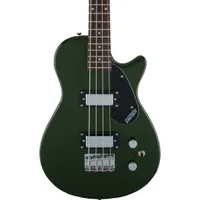
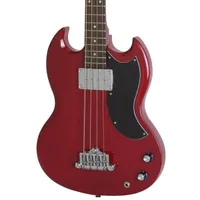
How to choose

If you're buying a bass guitar for a young child or for yourself, then I've leveraged over twenty years of playing experience to create this guide. Here's what you need to know before buying for the first time.
1. Size considerations
You can trust Guitar Player. Our expert reviewers spend hours testing and comparing guitar products so you can choose the best for you. Find out more about how we test.
Bass guitars can be pretty large instruments, so if you are a smaller person or buying for a child, you may want to consider whether a full-size bass might be a little too big for them. Fortunately, there are some other options that may be better.
I would never say don’t buy a ¾ bass, because these can be a brilliant way of getting the smallest players playing from an early age. It is definitely worth bearing in mind that they may well grow out of these quicker than you expect. A good mid-point that should suit any player, other than the exceptionally large, is a short-scale bass.
2. Genre
While a beginner may have been inspired to play bass because of a certain genre, if they are anything like me when I started playing, I ended up trying out plenty of different genres during my lessons, so a versatile bass may well be the best option. Don’t necessarily be put off by the names of basses either – a Jazz bass will do much more than just Jazz!
3. Accessories
While most beginner basses are very budget-friendly, and therefore don’t come with any included extras as more premium basses would, some beginner bass guitars may be available with accessories in a pack. Some of these package deals will include amplifiers – though in truth, many of these are not particularly excellent, and you may be looking to upgrade fairly quickly.
Things you should definitely consider as add-ons when buying a beginner bass are a tuner, potentially some picks, and a case so the bass can easily be transported to lessons and jam sessions.
FAQs

What's the difference between a P-Bass and a Jazz Bass?
To put it simply and without going into the history of the P and J bass models in Fender’s illustrious lineup, the difference between a P-Bass (P standing for Precision) and a Jazz bass is the pickups, feel, and tone, as well as generally a shape difference too. A P-Bass has a single split-coil pickup and typically has a thicker neck. It delivers a punchy, mid-focused sound that cuts through in a mix.
A Jazz Bass has two single-coil pickups and a slimmer neck, which can make it easier to navigate quickly. It’s brighter and, due to the dual pickups, more versatile. They can have more definition, especially when you blend the pickups. Some basses will pair a P-Bass pickup with a Jazz Bass pickup, giving you the best of both.
Can I start with a 5-string bass?
There’s no reason you can’t start with a 5-string bass, and if that is the style of bass you plan on playing long-term, then it may actually be smart to start with a 5-string. That said, my recommendation would be to start out with a 4-string, if you’re not 100% set on playing 5-string, though, as it is that bit simpler to get the fundamentals down and really become familiar with a bass. A 5-string is also going to be that bit more difficult for junior players to get used to, due to having wider necks and the very thick low string, which can be a challenge for small hands.
What's the difference between an active and a passive bass?
An active bass will have pickups that require an external power source – typically a 9V battery that is mounted internally. A passive bass does not require any power source and can simply be plugged into your amplifier. Some basses may not have active pickups, but active onboard electronics, such as a preamp or EQ.
Active basses will usually have particularly powerful pickups, which are good for metal and high-gain playing and are praised for having high-fidelity, articulate, and modern tones. If you are the kind of player who likes to use long cables, an active bass can also be good for ensuring you don’t suffer from signal loss across those long cable runs.
Are bass guitars heavy?
In general, if you were to compare a standard-sized bass guitar to a standard-sized electric, a bass is likely to be heavier, purely because of its size. This doesn’t necessarily need to be the case, though, as you can get short-scale basses, which are far more comparable in size to a regular electric guitar.
What is a short-scale bass?
A short-scale bass is exactly what it says – a bass guitar with a reduced scale length. This means it has a shorter neck and string length measuring 30” (generally) compared to a full-scale bass, which is 34”. This means it has frets that are closer together, and string tension is reduced.
Short-scale basses are often favored by beginners as the compact size is great for smaller players. You’ll also find many electric guitarists opt for a short-scale bass, as it is a more comparable size and feel to an electric guitar. It should be noted that short-scale basses aren’t necessarily the same as ¾ instruments, which generally are entirely shrunk to be more suitable for children.
What is neck dive?
If a bass isn’t balanced particularly well, and the neck and head are much heavier than the body, then the neck can sag towards the ground – this is called neck dive. This isn’t just an occurrence on bass guitars, with many electric guitars also notorious for this, with a longer neck, which means more wood beyond the neck join (essentially, the mid-point of the guitar) a bass is much more likely to suffer. While severe neck dive may be a challenge to remedy, a high-quality guitar strap can help mitigate this.
Will I need to pay for a setup for my beginner bass?
There is a good chance you may need to pay for a setup for your beginner bass, as most will be manufactured in huge scale in factories that don’t have time to quality check and set up every instrument. Depending on the retailer you purchase your instrument from, you may be fortunate that they have included a basic setup with your bass; this is fairly rare. I would always ask the question to the retailer if you can, as if it’s not included, then you may be able to get a discounted rate, or at least save some time on having to take it to a store after purchase.
Can I use a guitar amp with my bass guitar?
You can, but I wouldn't recommend it. Guitar amp speakers aren't designed to deal with the very low frequencies a bass guitar delivers, which can lead to damage if used for a long time or at high volumes. If you want the best sound from your bass guitar, get a dedicated bass amp or an amp modeler that has bass presets on it.
What are some good accessories to buy with a beginner bass guitar?
If you plan to play standing up, or if you just want a little more security when sat down, I would definitely suggest buying a guitar strap for your bass.
For any beginner player, I would always suggest that a guitar tuner should be among the first things on the list, preferably bought at the same time as your bass guitar. If you can’t afford a tuner, there are some decent apps (many free!) that will do a great job, but a standalone tuner is likely to be more reliable.
Most beginner bass guitars won’t come with a guitar case of any sort, so at a minimum, I would suggest buying a soft case for your bass, which should make it easier to transport to-and-from lessons, rehearsals, or shows. If you want to up the level of protection, investing in a good hard case is a great idea, and if you buy a generic hard case, rather than a model-specific case, this case could be used with future bass purchases – my bass hard case has seen about four bass guitars come and go over the years!
Key terms
- Action: How high the strings sit above the frets.
- Active electronics: Pickups or on-board preamps/EQ powered by a battery for a stronger, cleaner signal, or powerful tonal shaping, respectively.
- Bridge: The hardware that anchors the strings at the body.
- Fret buzz: Unwanted rattling when strings hit the frets, often caused by the action being too low.
- Fretboard (fingerboard): The layer of wood on the front of the neck where you press the strings with your fingers.
- Gauge: How thick the strings are. A higher gauge means thicker strings.
- Intonation: How in-tune the bass is up and down the neck. Bad intonation will see you in tune when you play an open note, but be out of tune when you play higher up the neck.
- Nut: The small piece of material where the neck meets the headstock that spaces the strings. Historically made of bone, but more commonly made of a synthetic material on beginner basses.
- Passive electronics: Pickups with no battery that produce a simple, classic tone.
- Pickups: The magnet devices mounted into the body of your bass that turn string vibration into sound.
- Preamp: Boosts and shapes your bass signal, usually part of active systems.
- Scale length: The distance from nut to bridge. Scale length affects tension and tone. Bass scale lengths can range from 30” (short scale) to 36” (long scale).
- Setup: The process of adjusting the bass so it plays and sounds right. This may be required out of the box and is offered at most good guitar stores, or can be done yourself (with experience).
- Short scale: A bass with a shorter neck (30”) that can suit smaller players better than a full-scale bass. Due to the shorter neck, the string tension is looser, giving a signature thump.
- Truss rod: A metal rod mounted in the neck that controls relief (the position of the neck).
How we test

Here at Guitar Player, we've tested our fair share of bass guitars over the years. Our approach to testing has always been meticulous, ensuring parity across multiple reviews in a particular product category. These reviews also inform the choices in our buying guides, giving our writers the expertise to judge whether or not a product is suitable for its particular use case.
Here's a breakdown of what we look for when reviewing a beginner bass guitar:
1. Build quality - We'll start by examining the bass from headstock to bridge. We're looking to see that everything is solid and well put together. We check the neck joint to ensure there are no gaps, the machine heads and knobs are solid, and that the pickups are sitting nicely. We'll also examine the finish to make sure there are no defects there either.
2. Playability - Next we'll play the bass, testing its playability with various playing techniques and different types of music. As we're looking at beginner basses it's important to note the comfort of the neck profile with potentially younger players in mind, as they'll need a smaller size to make the most of the instrument.
3. Sound - Finally we'll test the bass guitar with a bass amp. Sound is a subjective thing, but our writing team has had extensive experience listening to different bass guitars, so we know the qualities to look for. A good bass will be articulate, particularly in the lower registers, delivering plenty of low-end power that with good amplification should deliver room-shaking sounds. It's also important to note the context of the instrument. We'd expect a very different sound from a vintage-inspired instrument to that of a more modern, active pickup-equipped bass.
Typically we'll test any bass guitars we're reviewing over a period of at least a couple of weeks. This allows us to really get to know it, and use it in various contexts whether it's from the comfort of our own home with headphones, right through to playing it at live shows.
Read more on how we test gear and services at Guitar Player.

